
Guide
When Folsom floors are due for refinishing or deep carpet care
Routine cleaning removes the soil that lands on a floor each day, but it cannot restore a worn finish or lift dirt that has settled deep in carpet fibers. These are the signs that a floor needs more, and the treatment that fits each one.
Reading the signs on hard floors
Walk the main corridor of an office or the entry of a busy shop at the end of the week and look along the floor toward the light. A healthy finish reflects evenly. A worn one shows dull lanes where people walk most, gray patches just inside the door and scuffs that a mop passes right over.
Those signs point to different levels of work. A floor that has lost some shine but still carries finish is a candidate for burnishing or recoating. A floor that stays dingy right after cleaning, with dirt trapped in or under the finish, has usually reached the point of stripping and waxing.
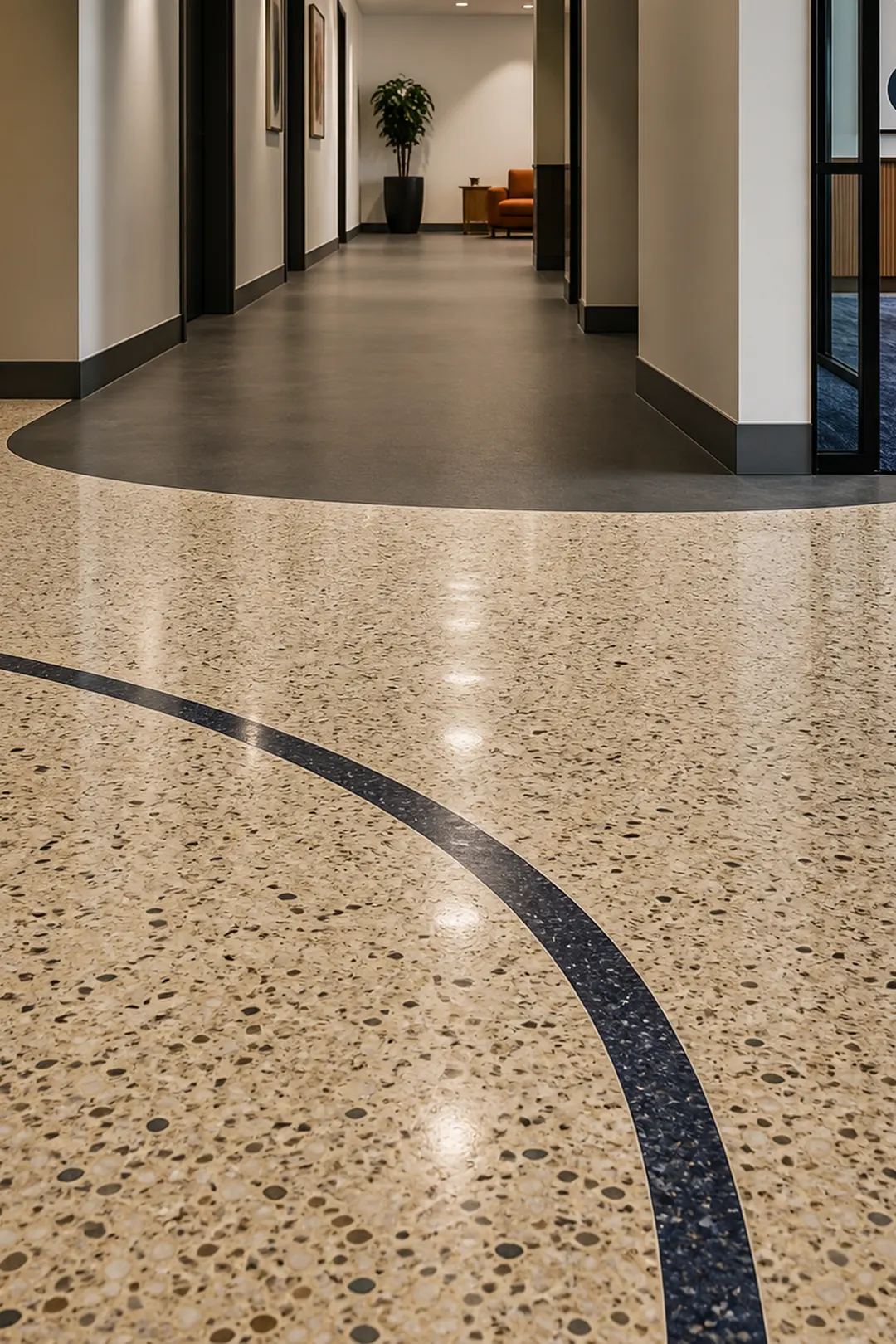
Concrete gives its own clues, such as gray, grimy aisles in back rooms and storage areas that mopping cannot brighten. Natural stone in a lobby tends to look hazy or hold soil in its texture, which calls for cleaning suited to the stone’s finish.
What burnishing, recoating and stripping each do
Burnishing is high-speed polishing that brings back the gloss of an existing finish. It is the lightest periodic treatment and works best on floors kept on a steady schedule, so entries and corridors stay bright between larger projects.
Recoating means scrubbing the top layer of finish and applying fresh coats over it. It renews a floor that has started to wear through in traffic lanes without taking everything down to the tile, so it takes less time than a full strip.
Stripping and waxing removes the old finish entirely and builds new layers from the bare floor. It suits resilient or VCT flooring that has worn or discolored beyond what recoating can fix, and it resets the floor so lighter maintenance works again.
Concrete, stone and carpet need their own methods
Not every hard floor takes a finish. Concrete is machine scrubbed to lift ground-in soil, and marble or terrazzo gets stone-safe cleaning and polishing rather than treatments meant for vinyl. Using the wrong method is one of the quickest ways to harm a lobby floor, which is why the material is checked before any periodic work is planned.
Carpet tells its story differently. Traffic lanes that look darker than the rest of the room, spots that return after cleaning, and a flattened, matted feel in waiting areas mean routine vacuuming is no longer reaching the soil. Carpet extraction and spot treatment pull out what vacuuming leaves behind, and the room-by-room office cleaning guide shows where that periodic work sits beside the nightly routine.
A typical building mixes several materials, with VCT in a break room, carpet in offices, concrete in storage and stone at reception. One floor care plan gives each surface the method that suits it.
How often periodic work comes around
Frequency follows traffic. The entry and main corridor of a busy shop reach the point of recoating far sooner than a quiet private office, and regular burnishing stretches the time between strip-and-wax cycles. Carpet in a waiting room with steady foot traffic needs extraction more often than carpet under desks in a back office.
A floor care calendar keeps this manageable. Routine vacuuming and mopping happen on each janitorial visit, and periodic treatments are placed on the calendar for the areas that need them, so the building looks even instead of pairing one tired corridor with a freshly finished one.
Watching for the signs above is the best timing guide. Catching wear early often means a burnish or recoat instead of a full strip, which keeps the work lighter and the downtime shorter.
Scheduling floor work around your business
Stripping, recoating and extraction all need time without foot traffic. New finish has to cure and carpet has to dry, so this work is booked for evenings, weekends or closures. A Friday evening start works well because it leaves the whole weekend before people return on Monday.
Each quote begins with a walk through the building, where the floors are looked at room by room and the materials confirmed. That visit settles which areas need periodic work, which furniture can move, and when people will return to the space.
A few useful answers
Quick answers.
How can I tell whether a floor needs stripping or just a recoat?
If the floor stays dull or dingy right after cleaning and the finish has worn through in traffic lanes, it is usually ready for stripping and waxing. Finish that is intact but tired responds to recoating or burnishing.
Can carpet extraction happen while the office is open?
Extraction is best scheduled after hours or on weekends so the carpet has time to dry before people walk on it.
How does burnishing relate to stripping and waxing?
Burnishing polishes a finish already on the floor, while stripping and waxing removes the old finish and lays down a new one.
What kinds of flooring suit stripping and waxing?
VCT and other resilient tile, once the surface has been checked. Concrete is scrubbed and natural stone gets care suited to its finish instead.
Services