
Industries
Property Management and Multi-Tenant Building Cleaning in Folsom
Cleaning for Folsom multi-tenant buildings that keeps shared lobbies, corridors and restrooms polished while every tenant suite runs on a plan of its own.
Shared buildings along Folsom’s business corridors
Much of the commercial space in Folsom is shared. Shopping centers put retailers, restaurants and service shops side by side with shared parking, walkways and sometimes restrooms, office and medical office buildings house many tenants under one roof, and the older downtown sets shops and restaurants wall to wall.
These properties have two audiences at once. Tenants judge the building by the lobby, the elevator and the common restroom, while their own customers judge the tenant by the suite. Property managers need a cleaning plan that serves both without mixing up who asked for what.
Lobbies, corridors and elevators
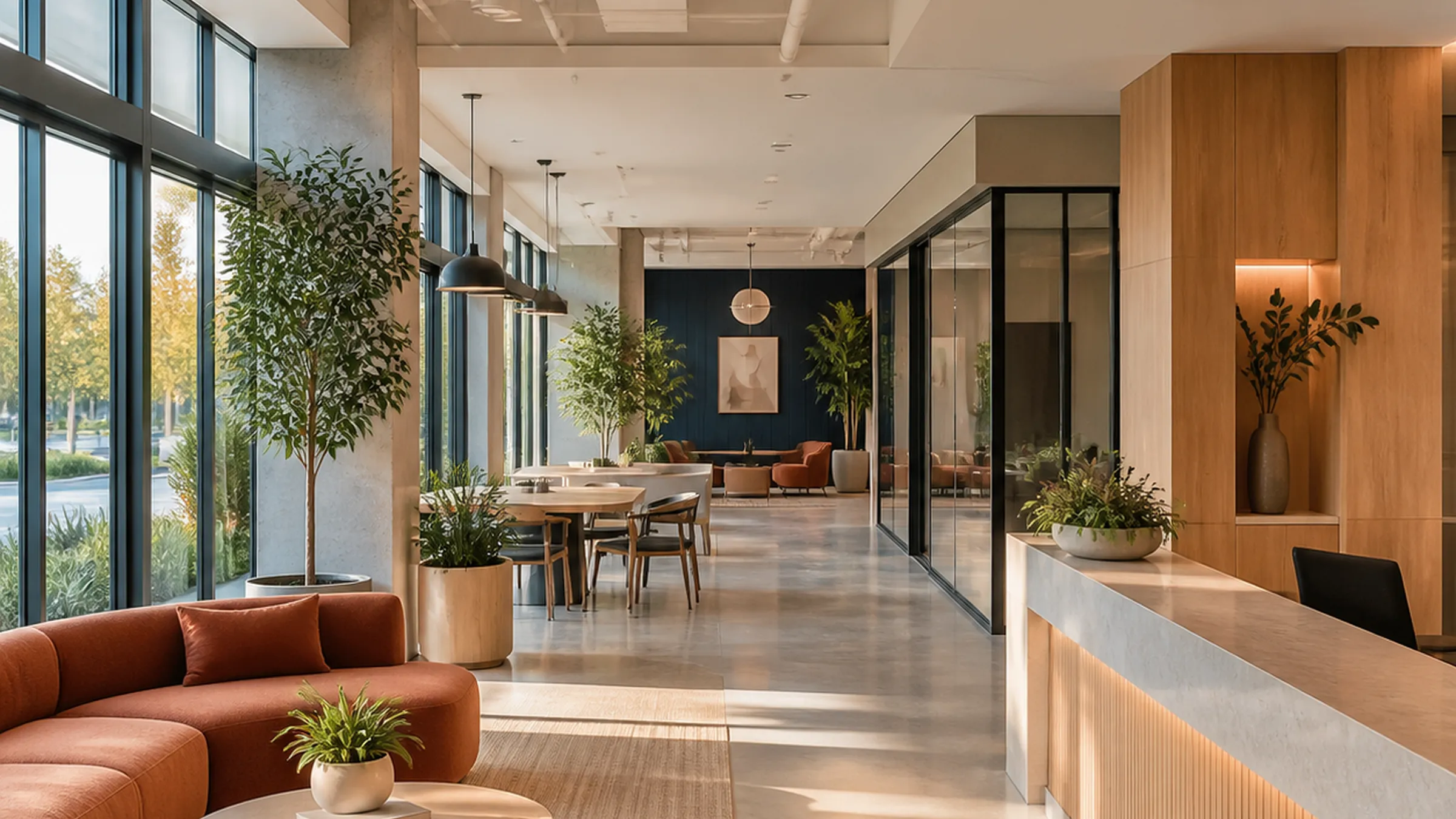
The common areas carry the building’s reputation. Entry glass and door hardware are cleaned, walk-off mats are vacuumed, and lobby furniture, directory boards and planters are dusted so the first impression holds all day. Elevator cabs get their doors, panels, handrails and floors detailed, and the tracks are cleared of grit.
Corridors and stairwells follow, with handrails wiped, baseboards dusted and floors cared for by surface. Drinking fountains, shared trash rooms and loading corridors round out the list, so the parts of the building tenants pass through every day stay as fresh as the front door.
Common restrooms and amenity rooms
Shared restrooms work harder than any suite restroom because every tenant and visitor uses them. Fixtures, partitions, mirrors and floors are cleaned and disinfected on each visit, and dispensers are refilled, from stock we supply or the building’s own, so no tenant has to call the office about an empty roll. A periodic restroom deep clean keeps their grout and fixtures bright.
A building may also offer amenities: a tenant lounge, a shared conference room, a fitness room or a bike room. Each amenity has a checklist and frequency of its own, from wiping tables and resetting chairs to cleaning fitness equipment touchpoints and mirrors, so those spaces stay a selling point for the property.
Tenant suites on their own schedules
Inside a multi-tenant building, each suite has different hours and needs. A law office may want quiet evening visits, a dental practice follows its own room protocol through medical office cleaning, and a retail tenant wants its sales floor ready before opening. Each suite has a task list and schedule of its own, billed to whoever orders it.
That separation keeps things simple for the property manager. Common areas sit on the owner’s plan, suites sit on each tenant’s plan, and crews follow the same entry, key and alarm procedures throughout the building. Tenants who want daytime help can add a day porter for restrooms, spills and lobby touch-ups during business hours.
Vacancies, turnovers and build-outs
Every multi-tenant building has suites in transition. When a lease ends, tenant move-in and move-out cleaning resets the empty space, from walls and fixtures to restrooms, kitchenettes and floors, so the leasing agent can show it with confidence.
If the suite is remodeled before the next lease, post-construction cleaning follows the trades, and the corridor and elevator path the contractors used is cleaned before other tenants arrive the next morning. Vacant suites can also get a light monthly dusting so they never look neglected during showings.
One plan and one contact for the property
Property managers juggle tenants, vendors and owners, so the cleaning should be the easy part. One plan covers the common areas, any suites the owner pays for and the periodic work, with requests from the management office handled in one place. Background-checked crews work the building, and a certificate of insurance goes to every client for the vendor file.
Periodic projects keep the building looking newer than its age. Lobby stone can be cleaned and polished, corridor carpet extracted, and resilient floors stripped and refinished through floor care, all on weekends when the building is quiet. Managers with buildings in Folsom, El Dorado Hills and Cameron Park can keep one standard at each address. In an office park? See business park cleaning.
What sets the cost of common-area cleaning
Common-area cleaning is usually billed as a flat monthly fee. The size of the lobby and corridors, the number of floors, elevators and shared restrooms, the visits per week, amenity rooms, and periodic floor and carpet work all shape that fee.
Tenant suites are priced separately by their own size and schedule. A walkthrough of the building with the property manager sets both, so owners and tenants each see what they are paying for.
A few useful answers
Common questions.
Can the owner and each tenant receive separate cleaning invoices?
Yes. Lobbies, corridors and shared restrooms sit on the owner’s plan, while each tenant who orders suite cleaning has a task list and invoice of its own.
How often should a multi-tenant lobby be cleaned?
Every business day suits the lobby, elevators and common restrooms of a busy office building, with lighter areas such as stairwells on a weekly routine.
Can vacant suites be kept show-ready between leases?
Yes. After the move-out clean, a vacant suite can get a light dusting and floor touch-up on a set schedule so it looks cared for at every showing.
Is a certificate of insurance available for our vendor file?
Yes. A certificate of insurance goes to every client, and it can be issued for the property owner and the management company.
Can one plan cover buildings in more than one city?
Yes. Buildings in Folsom, El Dorado Hills, Cameron Park and the surrounding area can share one plan, with tasks set for each property.