
Industries
Coworking Space Cleaning in Folsom
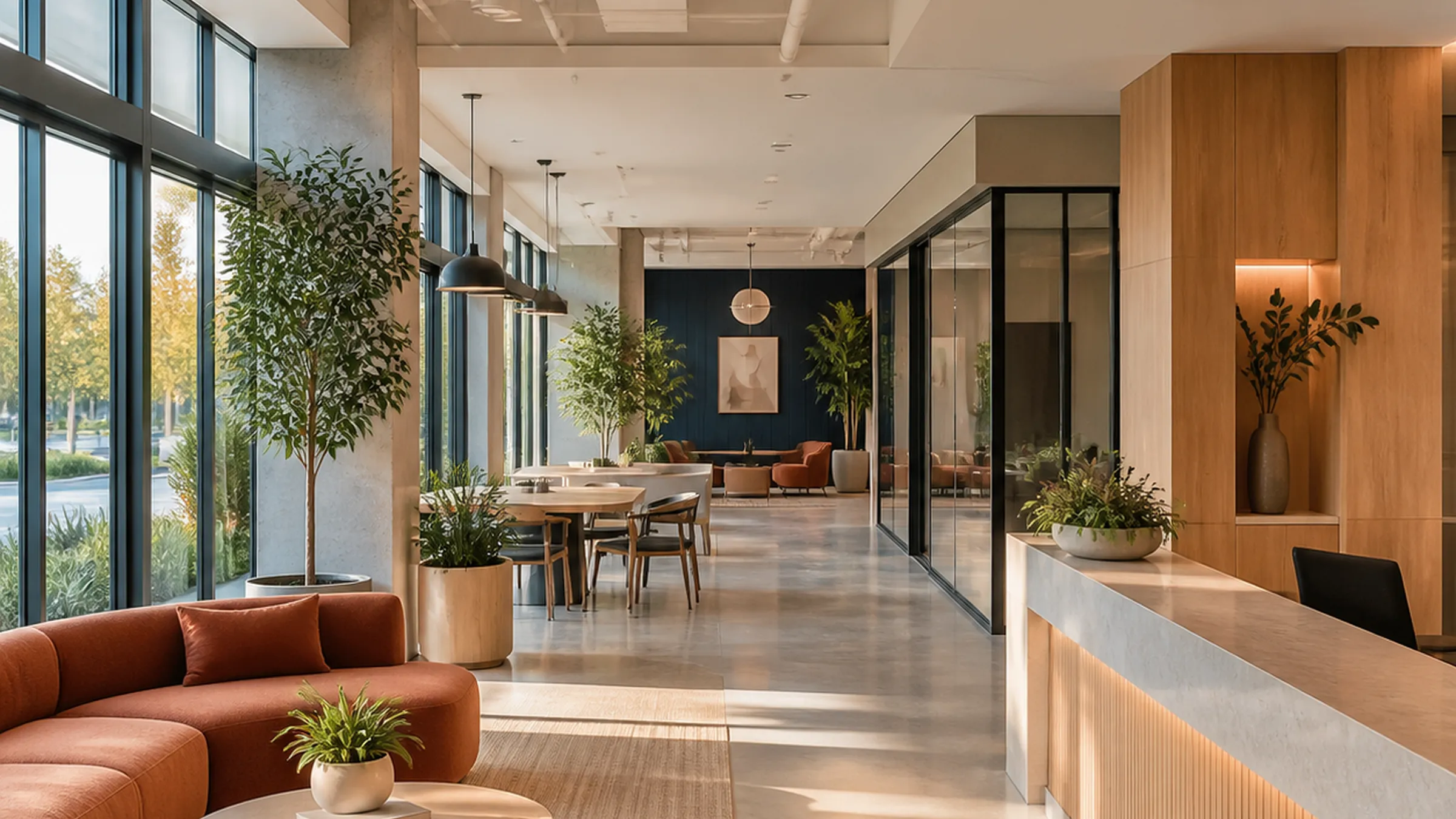
Cleaning for coworking floors, shared offices and executive suites around Folsom: hot desks, phone booths, member kitchens and meeting rooms, reset before the first member walks in.
Flexible offices in the Folsom area
Shared offices around Folsom come in several shapes. Some are open coworking floors with lounges and rows of hot desks, others are executive suite centers that rent furnished private offices by the month, and a few are small shared studios tucked into older buildings near the historic district. In El Dorado Hills and the office parks off Highway 50, flexible workspace often shares an address with conventional tenants.
What sets these floors apart is turnover. One hot desk might seat a new member every day of the week, a meeting room can hold a client pitch at nine and a workshop at two, and one kitchen serves every member on the plan. The cleaning has to reset each space for whoever arrives next, rather than simply tidy it for a team that already knows the room.
Hot desks, dedicated desks and private offices
Open-seating desks are cleared of stray cups and scrap paper, then the work surface, chair arms, monitor arms and desktop power and charging ports are wiped so the next person sits down at a fresh station. Dedicated desks with belongings left out are cleaned around those items instead of through them: laptops, notebooks and papers stay exactly where their owners set them.
Monthly private offices get emptied bins, dusted sills and shelves, and floors vacuumed or mopped by material, with the operator deciding which locked suites the crew enters and on which nights. Glass office fronts, a fixture of most coworking layouts, are cleared of handprints so the floor keeps its open, bright look.
Phone booths, meeting rooms and the event space
Enclosed phone booths and focus pods are tiny rooms in constant use. Their seats, shelf desks, door pulls and glass panels are wiped on every visit, and the floor inside is vacuumed so the booth feels as fresh at four in the afternoon as it did at eight.
Bookable meeting rooms are reset for the next reservation. Tables are cleared and wiped, chairs pushed back into place, whiteboards erased when the operator wants them blank, and remotes, conference phones and table connectors wiped down. A larger event or training room that hosts evening workshops or member mixers can get its own cleanup after the event, so a morning booking walks into a ready room.
The member kitchen and coffee bar
In most coworking spaces the kitchen is the room every member uses. Counters, sinks, cabinet pulls, refrigerator handles, the inside of the microwave and the front of the coffee machine are cleaned, tables and stools are wiped, and the kitchen floor gets mopped all the way to the toe kicks, where drips from the coffee bar settle.
Hand soap, paper towels and liners for the kitchen bins are supplied by us, or drawn from the operator’s own supply closet. Operators who also want the snack shelves and drink fridge kept full can add breakroom and pantry restocking as a separate service on its own schedule.
Lounges, restrooms and the front desk
The community desk and entry lounge are what prospective members see on a tour. Counter tops, entry glass and lounge tables are wiped, crumbs are vacuumed from sofa seats and the gaps between cushions, and throw pillows and lounge chairs are set back in order.
In the restrooms, the crew cleans and disinfects fixtures, stall partitions, mirrors and floors, then refills every dispenser before heading out. Floors with heavy restroom use can add periodic restroom deep cleaning for grout lines and the corners a nightly pass moves quickly over.
Working around member hours
Many shared offices let members in early, late or around the clock, so visits are set for the quietest stretch the operator sees, usually late evening or before dawn. When a few members are still at their desks, the crew starts in empty zones and saves occupied areas for last, keeping noise low and vacuums away from anyone on a call.
Busy floors can add a day porter to restock restrooms and reset the kitchen while members are in. Carpet tile in the open areas can be scheduled for hot water extraction on a weekend, so it is dry well before Monday morning.
Assurances for operators and landlords
A coworking operator answers to members on one side and a building owner on the other. Cleaners pass a background check before their first shift. The business is bonded and insured, workers’ compensation covers the crew, and a certificate of insurance goes to every client for the landlord’s file. Supervisors make quality inspections, so a missed booth or a smudged glass front is caught before members notice.
To get started, the community or operations manager shows us the floor on a free walkthrough. The written quote that follows lists each zone, its tasks and the nights it is cleaned, and the plan can grow with the floor as new offices and booths are added.
A few useful answers
Common questions.
Can members keep working while the crew is on the floor?
Yes. The crew begins in empty zones and moves to occupied desks last, working quietly and keeping vacuums away from anyone on a call.
What happens to belongings left on dedicated desks?
They stay where they are. The crew wipes the clear parts of the desk and the chair, empties the bin and leaves laptops, papers and personal items untouched.
Are phone booths and focus pods cleaned on every visit?
Yes. Seats, shelf desks, door pulls and glass get wiped, and the carpet inside the booth is vacuumed, each time the crew comes through.
Can a meeting room be cleaned right after an evening event?
Yes. A post-event visit can be booked for the event or training room, so it is reset before the next morning’s reservation.
How is a quote for a coworking floor worked out?
It is built from the floor’s square footage, the number of desks, booths and meeting rooms, the count of kitchens and restrooms, and the cleaning nights you choose each week, with porter hours or carpet extraction added as separate lines.