
Industries
Apartment and HOA Common Area Cleaning in Folsom
Common-area cleaning for apartment communities and homeowners associations around Folsom: leasing offices, clubhouses, fitness rooms, pool houses and the hallways residents walk every day.
Shared spaces in Folsom-area communities
Residential communities around Folsom, El Dorado Hills and Rancho Cordova come in several forms: garden-style apartment complexes, mid-rise buildings with interior corridors, townhome associations and master-planned neighborhoods with a clubhouse at the center. The newer neighborhoods south of Highway 50 and the planned villages in El Dorado Hills often add amenity centers, pools and fitness rooms for residents to share.
Those shared rooms are what residents pay dues or rent premiums to enjoy, and they are what prospective renters and buyers notice on a tour. Keeping them presentable is part of how a community holds its value, which is why they deserve a cleaning plan of their own rather than an occasional tidy-up.
The leasing office and front desk
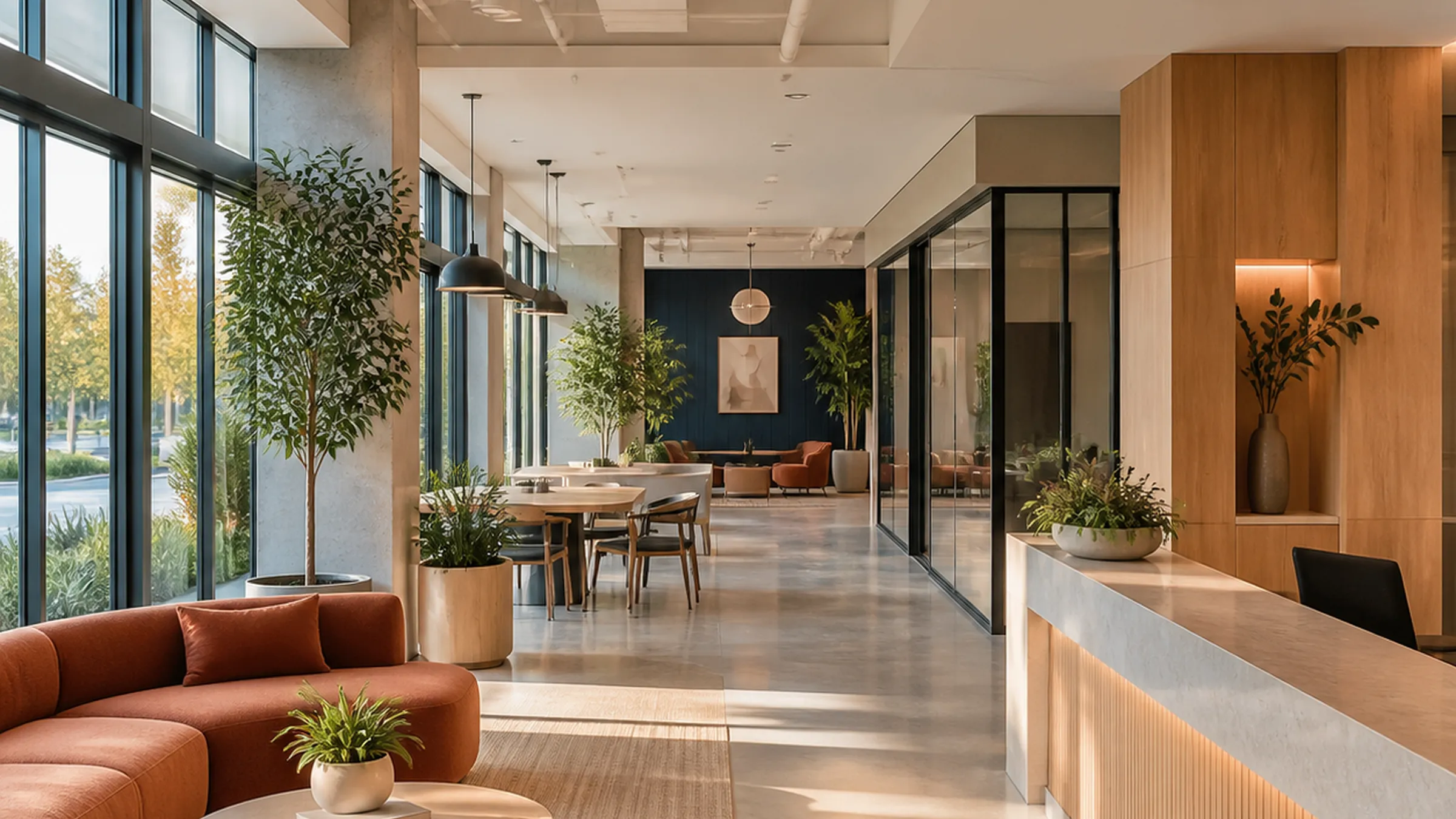
For an apartment community, the leasing office is the sales floor. Entry glass, the reception counter, brochure displays and seating are cleaned so every tour starts in a bright room. Desks in the agents’ area are wiped around paperwork, bins are emptied, and the restroom visitors use gets a full clean with fresh paper and soap.
The coffee bar or refreshment station that greets visitors has its counter, sink and machine fronts wiped down. Floors are finished according to surface, vacuumed or mopped, with walk-off mats cleared of the grit that comes in from the parking lot.
Clubhouses, fitness rooms and pool houses
A clubhouse may host a board meeting on Tuesday and a birthday party on Saturday. Event rooms are reset with tables wiped, chairs straightened and floors cleaned, and clubhouse kitchens get counters, sinks and appliance exteriors detailed. After a resident rental, a morning-after visit can be booked to put the space back in order before anyone else arrives.
In the fitness room, equipment grips, benches, consoles and mirrors are wiped, and rubber or vinyl flooring is cleaned to its type. Pool houses bring restrooms and changing rooms that work hardest in the warm months, so their visits can step up in summer and ease back once the pool closes for the season.
Mail areas, corridors and stairwells
Residents pass through the mailroom or mail kiosk area every day, so counters, package shelves and the floor beneath them are kept clear of dust and discarded flyers. In buildings with interior corridors, handrails, light switches and door hardware are wiped, baseboards are dusted and elevator cabs get their panels, doors and tracks detailed.
Stairwells and landings are swept and mopped, and corridor carpet is vacuumed along its full length, including the edges where dust builds up. Common restrooms in the clubhouse or leasing office are cleaned and disinfected, with paper and soap refilled from stock we supply or from the community’s own supply room.
Visits timed around residents
Residential properties are occupied around the clock, so timing matters. Clubhouses and fitness rooms are often cleaned early in the morning or mid-day on weekdays, when residents are at work, while leasing offices can be cleaned after closing so the team arrives to a fresh office.
Larger communities with several amenity buildings can add a day porter, who moves between the clubhouse, pool restrooms and mail area through the day, picking up litter, emptying bins and refreshing restrooms as they are used.
Carpet, tile and stone in the common areas
Corridor carpet in apartment buildings takes daily traffic from residents, movers and delivery drivers. Periodic carpet extraction lifts the soil that vacuuming leaves behind and keeps hallways from looking tired between renovations.
Clubhouse tile and vinyl floors can be scrubbed and recoated, and stone entries can be cleaned and polished. Floor projects are planned for the days and hours when the amenity spaces see the least use, so residents are not kept out of the rooms they rely on.
One plan for the board and the manager
An HOA board sets the standard and the budget, and the community manager handles the day-to-day. A written plan lists every shared space, the tasks for each and how often they happen, so both sides can see exactly what the association is paying for and can adjust it at budget time.
Crews are background-checked, the business is bonded, and it carries both general insurance and workers’ compensation. Supervisors conduct quality inspections of the common areas, and any concern raised by the manager goes to one contact. Managers who also oversee commercial buildings can see our multi-tenant building cleaning page.
A few useful answers
Common questions.
Can the clubhouse be cleaned after a private resident event?
Yes. A visit can be booked for the morning after a rental or community event, resetting the room, kitchen and restrooms before the next reservation.
How often does a community fitness room need cleaning?
A fitness room used daily is best served by several visits a week, with equipment grips, benches and mirrors wiped and the floor cleaned on each one.
What does an HOA board receive before service starts?
The board receives a written quote listing each shared space with its tasks and frequency, plus a certificate of insurance that can name both the association and its management company.
Can pool restrooms get more visits during the summer?
Yes. Pool house restrooms and changing rooms can be scheduled more often during swim season and reduced once the pool closes.
How is common-area cleaning for a community priced?
Four things shape the monthly figure: how many amenity buildings and restrooms the community has, how long its interior corridors run, how many visits a week it wants, and how often carpet and hard floors get periodic work. A free walkthrough turns them into a written quote.